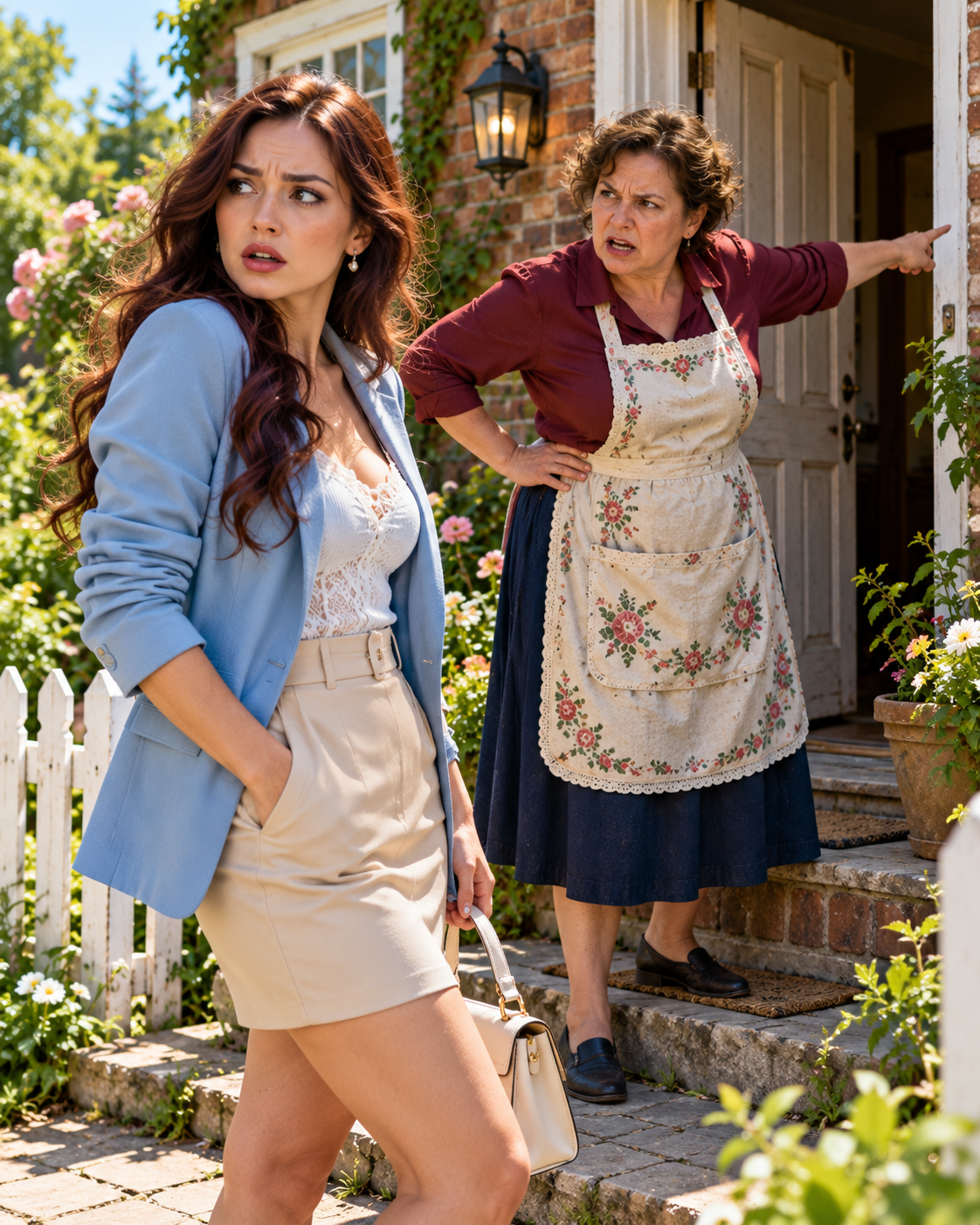

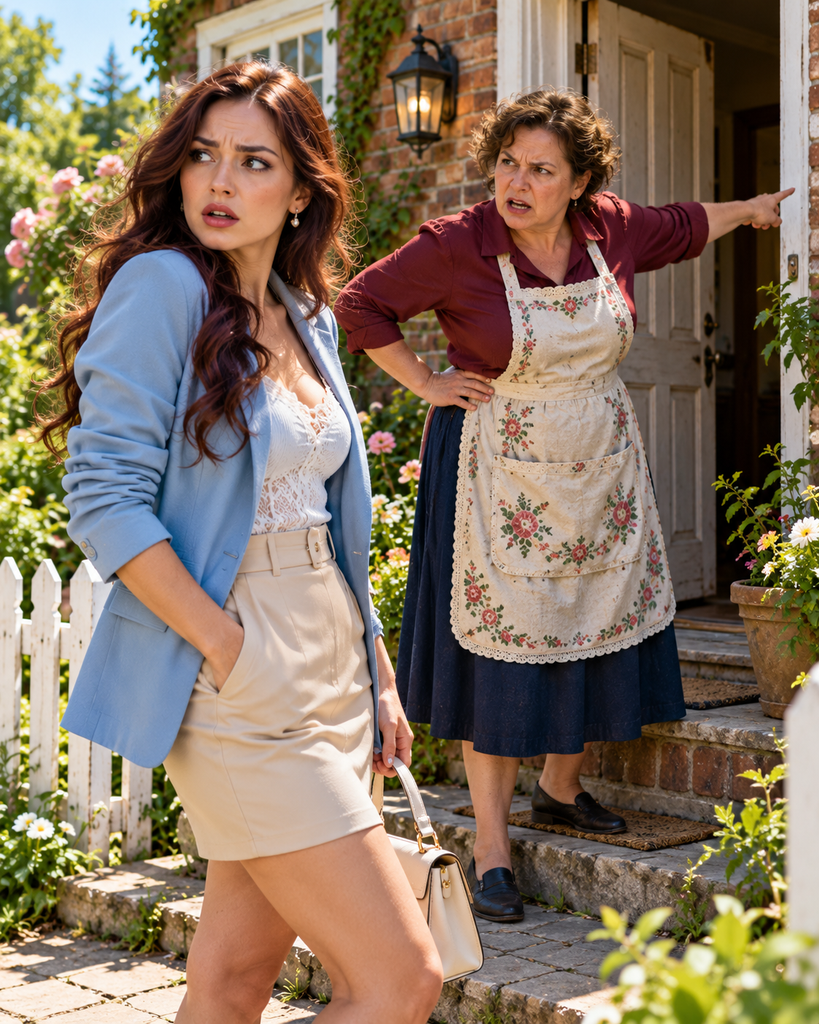
“That house is priced so low because there’s an old woman living in it, and nobody has been able to make her leave! If you decide to buy it, don’t come back expecting me to throw her out onto the street.”
Those were the first words I heard when I inquired about a modest brick house listed for sale in a small town near Asheville, North Carolina.
My name is Rebecca Collins, I’m 45 years old, and I’d recently been released from prison after serving three years of a six-year sentence for a crime I didn’t commit.
Almost everything I’d once had was gone.
My daughter Emily had died in a car accident at just twenty years old. My husband, Daniel, divorced me while I was incarcerated. My younger sister, Ashley, never bothered to visit me.
And the business I’d spent my life building since the age of twenty-one had fallen into the hands of those very two people.
When I was finally released under supervision, I owned little more than a suitcase, a modest amount of savings, and one unshakable determination: I would never again share a home with someone who was capable of betraying me.
That was what made the unusually affordable house so appealing.
Its owner, Brandon, explained that he’d inherited the property, but a 76-year-old woman named Margaret possessed a legally recorded lifetime right to occupy it. He was allowed to sell the property, but nobody had the authority to force her out.
“She’s a stubborn old lady,” he cautioned. “Every buyer who’s come along has ended up walking away because of her.”
The next morning, I went to meet her.
Mrs. Margaret opened the front door before either of us had a chance to knock.
“Another stranger here to find out how soon I’m going to die?” she demanded, giving me a thorough look from head to toe.
“No, ma’am. I’ve come to see the place where I might make my home.”
My response clearly surprised her.
The house contained two bedrooms, an outdated kitchen, a backyard overtaken by weeds, and a lemon tree that hadn’t been trimmed in years.
“This bedroom is mine,” Margaret announced. “We’ll share the kitchen. And I’m certainly not going to ask anyone’s permission before making myself a cup of coffee.”
“That works for me. I won’t be asking permission to make my coffee, either.”
For the first time since we’d met, she smiled.
Three days afterward, once an attorney had examined the paperwork, I signed the agreement to purchase the property.
Our first few days together weren’t easy.
Margaret found reasons to complain about practically everything: where I left my shoes, the way I swept the backyard, and even how long I kept the water running.
Meanwhile, I had some hazardous electrical wiring repaired, replaced the sink faucet, and arranged for a professional to examine the roof.
Gradually, we began adjusting to each other’s habits.
One afternoon, while she was tidying up the kitchen, Margaret discovered a photograph of Emily tucked inside my wallet.
“Is that your daughter?”
I nodded.
“Where does she live?”
“She’s buried in the cemetery.”
Margaret didn’t say anything. A moment later, she disappeared into her bedroom and returned holding a photograph of a young man.
“My son Michael died when he was thirty-two. He was a police officer. Ever since I lost him, this house has felt terribly empty.”
That night, we shared dinner without a single disagreement.
But one week later, something happened that I hadn’t expected.
While shopping at the local grocery store, I overheard two women gossiping about the new homeowner who had supposedly been in prison.
I returned to the house feeling humiliated, certain Margaret would tell me to pack my belongings and leave.
Instead, there was a warm bowl of soup waiting for me.
“People around town are saying you’re a criminal,” she said matter-of-factly.
“That’s what the court decided.”
“But what do you say?”
My throat tightened with emotion.
“I say my husband and my own sister manufactured evidence to have me imprisoned so they could steal my company.”
Margaret slowly placed her spoon on the table.
I explained the forged agreements, the questionable financial transfers, and the witnesses who had given testimony against me.
When I finished telling her everything, she got up, disappeared into her bedroom, and came back carrying a worn notebook.
She ripped out a sheet of paper and wrote a telephone number on it.
“You’re going to call this man tomorrow.”
“Who is he?”
“He was my son’s closest friend. These days, he investigates financial crimes.”
I stared at the piece of paper, almost afraid to reach for it.
Margaret leaned closer and spoke words that would stay with me forever:
“Maybe you bought this place because you thought you didn’t have a family anymore. But if everything you’ve told me is true, the people who ruined your life haven’t realized yet what a terrible mistake they’ve made.”
Then she pressed into my palm the telephone number that was about to change everything.
PART 2
For three consecutive nights, I looked at that telephone number without being able to bring myself to call.
I’d spent years maintaining my innocence. My attorneys had filed appeals, submitted formal requests, and highlighted inconsistencies in the evidence. None of it had accomplished anything.
What reason did I have to believe things would turn out differently now?
“Because this time, you’ve got someone who’s willing to uncover what they went to such lengths to hide,” Margaret told me.
At last, I picked up the phone.
Attorney James Mitchell listened patiently as I explained my situation. He’d been friends with Michael since they were young and had continued checking on Margaret after Michael passed away.
He agreed to examine my case records, although he made it clear that he couldn’t guarantee a successful outcome.
We arranged to meet at his office in Asheville.
“Rebecca, there’s something I need to ask you,” he said after reviewing my case file. “Who was responsible for managing your company’s computer network?”
“A young employee named Ethan Parker.”
“Was he called to testify at your trial?”
I shook my head.
Ethan had quit his job several weeks before I was arrested. I suddenly remembered that he’d once mentioned someone was making changes to older documents stored on the company’s server.
Back then, I hadn’t given his warning much thought.
I’d only recently buried Emily, and even dragging myself out of bed each morning had felt almost impossible.
“Before Ethan resigned, he told me he’d kept copies of the system backups,” I recalled unexpectedly.
James immediately looked up.
“That’s important. If those backups are still available, they might establish which files were changed and exactly when those changes occurred.”
I submitted the information through the proper legal channels. James specifically instructed me not to approach anyone involved in the case myself.
For the next two weeks, there were no developments.
Then Daniel called me.
“I’ve heard you’ve been going around asking questions,” he said, without bothering to say hello.
I knew that domineering voice immediately.
“I’m trying to clear my name.”
“You’ve already served some of your sentence. You ought to appreciate the fact that you’re not sitting in a prison cell anymore.”
“Are you afraid they’re going to uncover something?”
He laughed loudly.
“I’m afraid you’re going to cause yourself more trouble. Don’t forget that your freedom comes with conditions, and you still have to follow them.”
Then his voice dropped.
“And stop bothering Ashley. She has more than enough responsibilities managing the company.”
I ended the call with my hands shaking.
That evening, Margaret discovered me crying beside the utility sink.
“Did that man threaten you?”
“He made sure I remembered that he still has the power to destroy me.”
She placed both hands firmly on my shoulders.
“Just because somebody has power doesn’t mean they’re right.”
Three days later, I finally received the news I’d been hoping for all those years.
Investigators had located Ethan in Charlotte.
He agreed to provide an official statement and surrender an external hard drive he’d kept ever since leaving the company.
Digital forensic specialists began examining its contents.
A week afterward, James contacted me and arranged a meeting with another attorney, Olivia Bennett.
Two copies of the same contract were spread across her desk.
One version supposedly carried my authorization.
The other, which had been saved months earlier, didn’t contain my signature at all.
“The digital records indicate that several documents were altered using accounts associated with the finance department your sister supervised,” Olivia explained.
For a moment, I struggled to breathe.
And there was more.
Investigators had also recovered emails that Daniel and Ashley had exchanged.
One message said:
“Rebecca will be out of the office Thursday. Make sure those payments go through before she returns.”
My sister had replied:
“I’ve already spoken with Kevin. He’ll testify that she gave him the instructions personally. I’ll handle the documents as well.”
Kevin was the purchasing manager whose testimony had helped convict me.
“Are you telling me they arranged the entire thing?” I asked.
“We’ve uncovered some extremely troubling evidence,” Olivia answered. “But we still need to establish exactly what each person did.”
I went home overwhelmed by both hope and fear.
That same night, I discovered a plain white envelope someone had pushed underneath the front door.
Inside was a single sheet bearing a threatening message:
“You’ve already wasted three years of your life. Don’t make the mistake of losing whatever you still have.”
Margaret immediately secured the front gate.
I took a photograph of the note and forwarded it to Olivia.
The following morning, my attorney called again.
Something about her voice had changed.
“Rebecca, we’ve uncovered another document among the backups.”
“What kind of document?”
“One that supposedly bears your personal authorization. We believe it may have been used to strip you of control over your company.”
“What makes this one different?”
She paused.
“The date, Rebecca. It was dated after you’d already been sent to prison.”
I stood completely motionless.
Then Olivia said something that revealed just how far Daniel and Ashley had been willing to go:
“And we’ve identified someone who was there when that document was prepared. That person has now agreed to tell us what happened.”
PART 3
The person who had finally agreed to speak was Robert Hayes, the former chief accountant at my company.
For many years, I’d believed Robert was trustworthy. He’d worked alongside me since the business consisted of just eight employees and a modest warehouse outside Asheville.
Yet his testimony had played a major role in putting me behind bars.
The moment I saw him walk into Olivia’s office, anger surged through me.
“So you’ve finally decided it’s time to tell the truth?” I demanded.
Robert lowered his gaze.
“Rebecca, please let me explain what happened.”
“You’ve had three years to explain.”
He took the chair opposite mine and opened a folder.
He told us that following Emily’s death, Ashley had begun requesting approval for urgent financial transactions. Daniel supported every request, insisting I was too devastated by grief to handle the company’s affairs.
Initially, Robert believed they were simply trying to take some pressure off me.
But then unfamiliar suppliers began appearing in company contracts, along with bank transfers involving millions of dollars.
When the investigation into my alleged wrongdoing started, Ashley provided him with documents that seemed to show I’d personally authorized the transactions.
“The paperwork looked familiar, and so did the signatures,” he admitted. “I never suspected anyone had tampered with the electronic records.”
“And it never struck you as strange that the money was being transferred to businesses connected to those two?”
He remained silent.
Olivia then placed the document I’d supposedly signed while incarcerated directly in front of him.
Robert’s face went pale.
“I remember that day,” he said quietly. “Ashley ordered several corporate resolutions prepared to change the company’s management. Daniel was there with her. They told us their lawyers would take care of any questions about the signatures.”
“And you said nothing?”
“I was terrified of losing my position.”
I stared at him for several moments.
“I lost my freedom, Robert. My home. My company. Three birthdays of my daughter that I’ll never have the chance to celebrate with her.”
He began to cry.
But no amount of crying could restore what I’d lost.
“If you’re serious about making things right, give the authorities an official statement containing everything you know.”
I stood up and walked away without offering him my hand.
Two days later, another unexpected visitor arrived.
Kevin, our former purchasing manager, appeared at the front of our house.
Margaret was watering her flowers when he walked up.
“I’m looking for Rebecca Collins.”
“Why?”
“I need to ask her forgiveness.”
Margaret set the garden hose aside.
“We don’t hand out forgiveness like free samples around here. Start by telling me what you’ve done.”
Hearing their voices, I stepped outside.
Kevin admitted that Daniel had paid him to testify that I’d personally approved the fraudulent supplier contracts.
Ashley had provided the dates, paperwork, and financial figures he was instructed to mention.
“They told me they’d accuse me of being involved if I refused to cooperate,” he explained. “I had two little children to think about.”
“I had a daughter, too,” I replied. “And she’d already died when you helped destroy everything I had left.”
Kevin looked down.
“I never believed you’d actually be sent to prison.”
“But you accepted their money.”
He made no attempt to deny it.
I ordered him to leave and take his confession directly to the investigators.
Before walking away, he revealed something that sent a chill through me.
“Daniel and Ashley have been shifting ownership of properties for months. They’re scared you’ll regain control of the company.”
Olivia began investigating the property records.
She discovered that several assets had been transferred into companies associated with people close to my former husband.
One of those properties was the vacation house where Emily had spent so many happy years growing up.
It was in that garden that my daughter had learned to ride her bicycle.
We’d celebrated her fifteenth birthday there.
And now Daniel was trying to sell it.
When Olivia broke the news, I had to sit down.
“They’re attempting to dispose of anything that could eventually be returned to you,” she explained. “We’ll request the appropriate court orders to prevent those assets from disappearing while the transactions are being investigated.”
That night, Margaret found me studying old pictures of Emily.
“Was that vacation house beautiful?” she asked.
“It was. But it wasn’t the furniture or the garden that made it special. It was the place where my little girl had been happy.”
Margaret gently brushed her fingers across one of the pictures.
“Then you have every reason to fight for it.”
One morning, an expensive black sedan stopped outside our gate.
Ashley climbed out.
She was wearing a sophisticated dress, designer sunglasses, and carrying a handbag that probably cost more than everything I owned inside the house.
It had been three years since I’d seen her from such a short distance.
“We need to have a conversation as sisters,” she announced.
Margaret crossed her arms.
“Well, isn’t that something? This girl has been living with me for months, and you’ve only just remembered you’re her sister.”
Ashley pretended not to hear her.
We walked into the backyard.
“You’re making a serious mistake, Rebecca,” she began. “If you continue with this, you’ll end up destroying the company.”
“My company.”
“It doesn’t belong exclusively to you anymore.”
“Since when? Since you started forging my signature, or since Daniel started sharing your bed?”
Her expression shifted.
“We fell in love. Hurting you was never our intention.”
A sharp ache spread through my chest.
“When did your relationship begin?”
Ashley looked away.
“That’s irrelevant now.”
“Did it start while I was planning Emily’s funeral?”
She didn’t respond.
Her silence answered the question.
I remembered my sister embracing me beside Emily’s coffin, promising that I would never have to face life alone.
All that time, she’d been having an affair with my husband.
Ashley reached into her expensive handbag and produced an envelope.
“We can settle this privately. We’ll give you a substantial sum, a house, and enough financial support to rebuild your life. You just have to withdraw your allegations and stop pursuing the case.”
I wouldn’t take the envelope.
“How much do you think my innocence is worth?”
“Stop being so dramatic. You’ve already lost three years. Nothing you do will bring those years back.”
Then she delivered the cruelest words I’d ever heard from her.
“And even if you manage to get everything returned to you, Emily will still be dead.”
The air seemed to vanish from my lungs.
Margaret rose sharply from her chair.
“Get out of my house, ma’am.”
Ashley let out an uneasy laugh.
“This is a private matter between my sister and me.”
“Then perhaps you should have treated her like a sister when you had the opportunity.”
For the first time, Ashley looked genuinely embarrassed.
She walked away without another word.
As soon as her car disappeared down the road, my knees began to buckle.
Margaret came and sat beside me.
“I practically raised her,” I whispered. “When our parents couldn’t afford school supplies, I bought them for her. I gave her a position at my company. I trusted her more than anyone else in the world.”
Margaret wrapped her fingers around mine.
“When I buried Michael, I believed my life had ended, too. But losing someone doesn’t mean we should surrender all our remaining years to the people who’ve caused us pain.”
I leaned against her shoulder.
And for the first time in years, I allowed myself to cry without holding anything back.
Meanwhile, the evidence against Daniel and Ashley continued to grow.
Ethan’s backup drive enabled investigators to compare original company records with altered copies. Digital forensic examinations identified substantial changes, while Robert’s and Kevin’s statements explained how those falsified records had been used to frame me.
Olivia filed the appropriate motions seeking official recognition that I’d been wrongfully convicted.
She cautioned me that uncovering new evidence wouldn’t automatically cancel my sentence. A court would need to examine the material and determine whether my conviction had been based on false evidence.
Progress came slowly.
Sometimes several weeks passed without a single update.
On certain nights, I woke in terror, convinced the authorities were coming to take me back to prison.
Margaret never told me everything would magically work out.
She simply brewed a pot of coffee and said:
“We’ll try again tomorrow.”
Eventually, the day of the crucial hearing arrived.
I dressed in a white blouse I’d purchased specifically for that day.
Margaret insisted on accompanying me.
“I’m seventy-six years old, Rebecca. I’m not so ancient that I’d miss watching someone finally put an injustice right.”
Inside the courtroom, I listened as the attorneys described the inconsistencies between the documents.
The forensic reports were introduced, along with the new witness testimony.
When the judge allowed me to address the court, I rose to my feet.
“I built that business because I wanted to provide a future for my daughter. After she died, I trusted two people because I believed they were my family. I never approved the diversion of those funds. For three years, I lived with the label of criminal. I’m not asking anyone to feel sorry for me. I’m asking for the truth to finally be recognized.”
The wait for the court’s decision seemed to stretch on forever.
Then I heard the words I’d imagined countless times while sitting inside my prison cell.
The court formally acknowledged my innocence and overturned the conviction that had unjustly taken away my freedom.
My attorney leaned close.
“Rebecca, it’s finished. Your name has finally been cleared.”
I didn’t shout.
I didn’t cheer.
All I could think about was Emily.
How much I wished she could have been waiting outside to throw her arms around me.
When I emerged from the courtroom, Margaret was standing beside the entrance.
“Well? What happened?”
I tried to speak, but emotion caught in my throat.
“I’m innocent, Margaret. And now the court has finally acknowledged it.”
She pulled me into such a fierce embrace that we both began crying.
“About time, my girl. It’s about time.”
That was the first occasion she’d ever addressed me as her daughter.
But clearing my name was only the first step.
Olivia explained that reclaiming my properties and regaining control of the business would involve separate legal actions.
A new criminal investigation was also proceeding against Daniel, Ashley, and several other individuals.
Over the following months, we examined corporate documents, financial transfers, business agreements, and property records.
We uncovered resolutions falsely claiming that I’d surrendered my ownership interests while I was still locked inside prison.
Several of those transactions were challenged in court.
At the same time, prosecutors brought charges against Daniel and Ashley for the offenses supported by the available evidence.
My hands shook when I finally returned to the building that housed my company.
Someone had replaced the furniture in my old office.
The walls had been repainted.
But the small wooden cabinet remained in its original spot.
I opened one of its doors and noticed a tiny scratch.
Emily had made that mark with a metal ruler when she was ten, while waiting for me to finish a business meeting.
I gently touched it.
“Mommy’s home, sweetheart,” I whispered.
Even then, I refused to call myself the company’s owner until my rights had been officially restored.
The following months brought more court appearances and difficult legal decisions.
Eventually, I recovered control of the business and a portion of the assets that had been wrongfully transferred.
Some properties required further lawsuits.
Nothing was handed back to me overnight.
And I had no intention of pretending the betrayal had never happened.
When I presided over my first employee meeting after returning, several staff members couldn’t bring themselves to look me in the eye.
“I’m not here to punish people for trusting a court judgment that appeared valid,” I told them. “But I will never allow forged paperwork or dishonest practices to be used through this company to ruin another person’s life.”
I hired independent auditors and completely redesigned the company’s financial approval procedures.
I’d finally understood that placing your trust in someone shouldn’t mean handing them the ability to destroy you.
The criminal case against Daniel and Ashley continued.
When the court eventually sentenced them to prison for the crimes established against them, I attended the hearing.
Ashley turned toward me.
“Are you satisfied now? You’ve taken everything away from me.”
I looked at her and struggled to see any trace of the little girl whose hand I’d once held on the walk to school.
“No, Ashley. I would much rather have kept my sister.”
She opened her mouth, but nothing came out.
I walked out of the courthouse without any sense of triumph.
Justice had been served, but it couldn’t restore the years I’d lost or bring my daughter back to life.
The final property I managed to reclaim was our old vacation home.
Once the court issued its final decision, I drove there by myself.
The garden had fallen into disrepair. The original furniture was gone, and Emily’s bedroom had been converted into an office.
I remained outside that room for a long time.
Afterward, I drove back to the small town.
Margaret was sitting at the kitchen table peeling apples.
“I got the vacation house back,” I told her.
“That’s wonderful. When are you moving in?”
“As soon as you’ve packed your belongings.”
Her knife stopped halfway through an apple.
“What do you mean, my belongings?”
“I want you to move there with me.”
“My bedroom is right here. Nobody can force me to leave.”
“I know that, and nobody ever will. This house will always belong to us, and you’ll be welcome to come back whenever you like. But the other place has more bedrooms than we could possibly need, it’s closer to the hospital, and I don’t want to live there by myself.”
Margaret narrowed her eyes.
“Are you inviting me because you feel sorry for an old woman?”
“No.”
“Then why on earth do you want me there?”
I pulled out a chair and sat facing her.
“Because when everyone else abandoned me, you opened your home to me. Because you cooked soup for me while the entire town whispered that I was a criminal. Because you were the only person who bothered to ask whether I was telling the truth before deciding I was guilty.”
Tears began gathering in her eyes.
“Rebecca…”
“Because you’re my family now, Margaret.”
She turned her face toward the window.
“I’m certainly old enough to be your mother.”
I smiled warmly.
“Good. Because I’ve been needing one.”
We embraced in that modest little kitchen where our story together had started.
One week later, we moved into the vacation house.
Margaret refused to leave behind her battered old armchair, Michael’s photographs, or a dented cooking pot she’d owned for years.
In the living room, we arranged two framed portraits next to each other.
One showed Emily, and the other showed Michael.
Two beloved children who would never come home, yet whose memories had united two women who’d once believed they had nobody left.
As time passed, my company returned to profitability. I received some of the compensation legally owed to me, and I kept ownership of the little house in town.
Every so often, we drove back to tend the lemon tree.
One Sunday afternoon, while we enjoyed coffee in the backyard, Margaret turned to me.
“Rebecca, I want you to tell me something truthfully. Have you ever regretted buying that house with an old lady included?”
I met her eyes and smiled.
“At first, I was convinced I was purchasing a property that came with a gigantic problem.”
“You cheeky girl!”
“But then I realized the house came with something all the money in the world couldn’t buy.”
“And what might that be?”
I reached across the table and held her hand.
“A mother.”
Margaret reached out and gently brushed my hair.
“And I was certain I’d spend my last days completely alone.”
We held each other as the afternoon breeze rustled softly through the lemon tree’s branches.
I’d regained my freedom, restored my reputation, and recovered much of what had been stolen from me. Daniel and Ashley had finally faced the consequences of their actions.
Yet that afternoon, I understood that my greatest victory hadn’t taken place inside a courtroom or behind a corporate desk.
It had happened in a simple kitchen, when a wary elderly woman chose to believe someone the rest of the world had already condemned.
Because sometimes the people who share our blood can be the ones who hurt us most deeply, while a stranger can restore our desire to keep living.
And if losing nearly everything taught me one lasting lesson, it was that real family isn’t determined by shared surnames, inherited property, or beautiful promises.
Real family is made up of the people who remain beside us when we have nothing left in the world to give them except our hearts.